
Diversity, Inclusion and Equity in the workplace
Diversity in the workplace refers to a workforce composed by individuals with various visible and/or invisible differences. Some common types of diversity include age, gender, sexual orientation, ethnicity, nationality, religion. For CERN, a specific diversity dimension is the representation of member states within the Member of Personnel Employed (MPE) category, which includes staff and fellows.
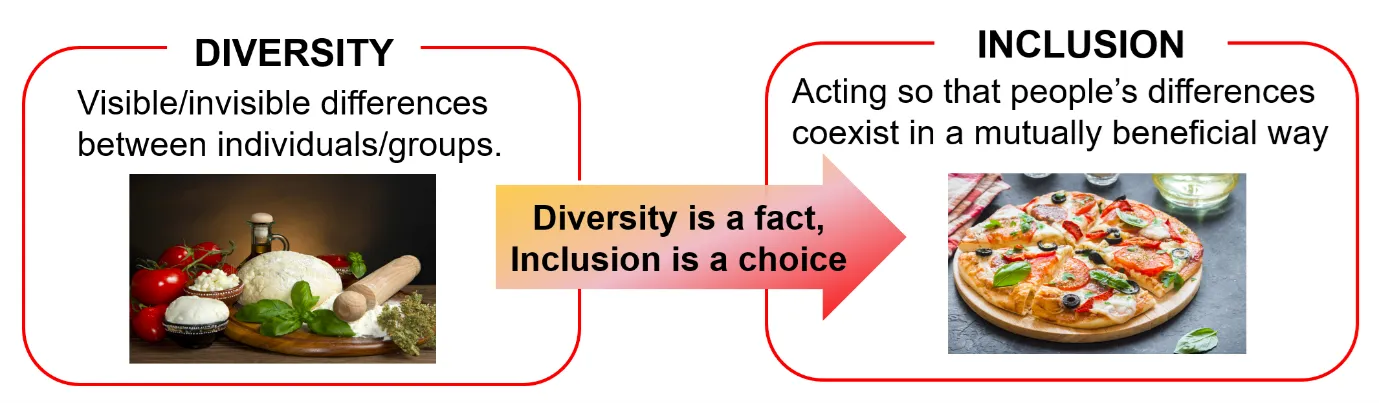
Diversity is a fact of life as well as a choice for a company.
To fully reap the advantages of diversity, a company must put in place two additional strategies: inclusion and equity.
Inclusion and equity in the workplace refer to organizational practices, strategies and policies that allow people’s differences to coexist in a mutually beneficial manner. Examples include providing equal learning and evolution opportunities to individuals belonging to diverse groups. Companies are also called to act in a proactive manner to level the playing field for the less represented demographics. This includes actions such as removing institutional bias.
Why it’s important to have Diversity, Inclusion and Equity in the workplace
Diversity, Inclusion and Equity in the workplace D&I in the workplace is the ethical choice and should be a core value in every organization.
It is also an enabler of technical excellence as it fosters creativity and innovation. Studies shown that it is a good choice for business. As an example. Juliet Bourke, Which Two Heads Are Better Than One? How Diverse Teams Create Breakthrough Ideas and Make Smarter Decisions, Australian Institute of Company Directors, 2016 demonstrates how organizations with inclusive culture have higher performances (3x), are more innovative and agile (6x) and can achieve better business outcome (8x). It can boost a company’s reputation and improve recruitment.